Q-Drench 1L (Expiry 31/03/2026)

Q-Drench 1L (Expiry 31/03/2026)

$165.00

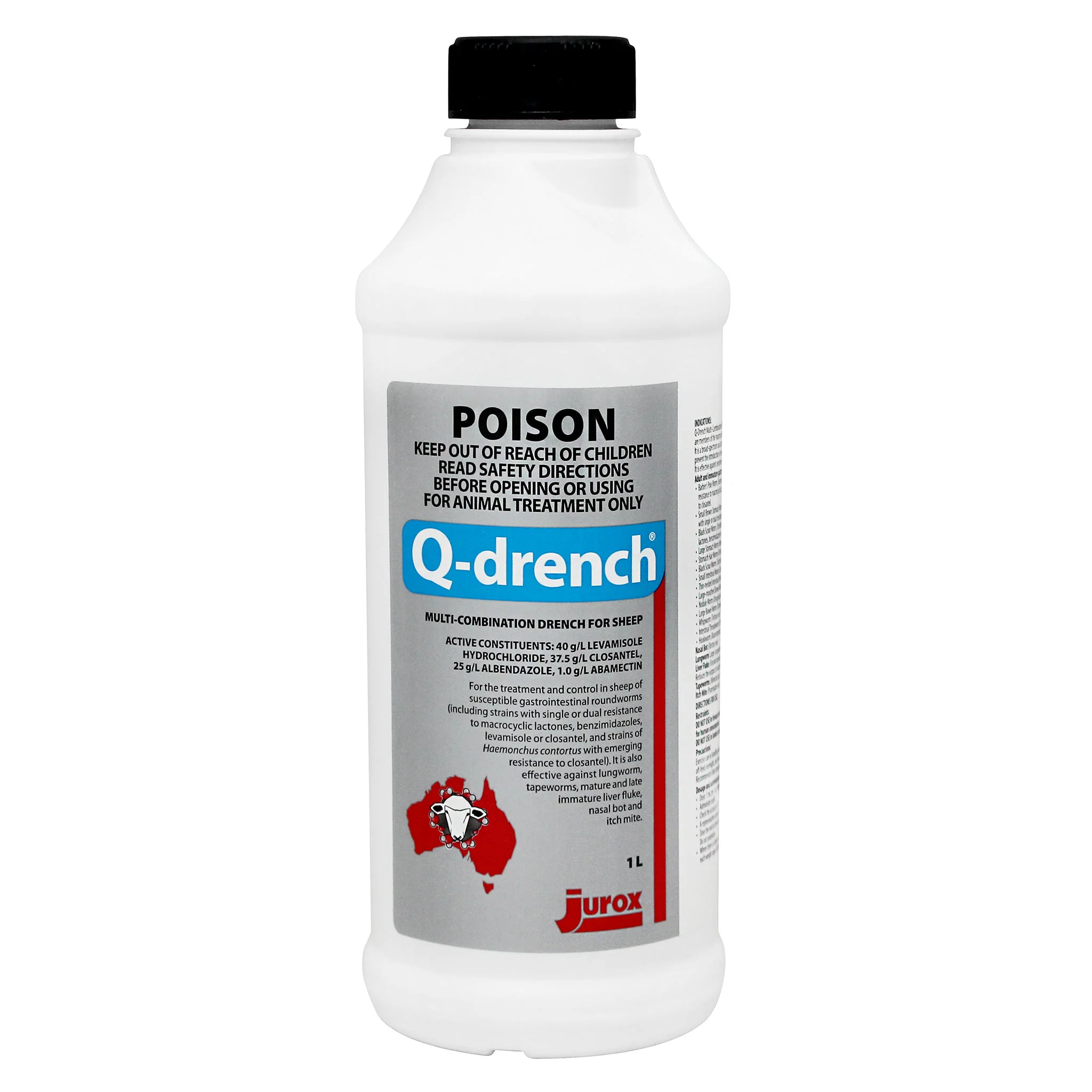
Q-Drench 1L is a broad-spectrum drench for sheep and cattle, with 4 actives to control worms, prevent resistance, and support livestock health.

In stock

What Farmco Recommends It For:

Farmco recommends Q-Drench® for strategic, high-efficacy treatments such as weaning, pre-lambing, quarantine, primer and exit drenches. It’s ideal when producers need maximum effectiveness to protect flock health and delay the development of drench resistance.

Why It’s a Farmco Favourite:

Farmco favours Q-Drench® because its four-way combination delivers exceptional broad-spectrum control, targeting parasites through four different modes of action. Developed in Australia for Australian conditions, it offers reliable performance, strong resistance management, and excellent value for producers needing confidence at key drenching points.

Q-Drench®

Multi-Combination Drench for Sheep

Q-drench Is the Ideal Choice for Strategic Treatments Such as Weaning, Pre-lambing, Quarantine, Primer and Exit Drenches Which Rely on the Highest Possible Efficacy to Achieve Their Aims. It Was Developed in Australia for Australian Sheep Producers and Contains 4 Actives with 4 Different Modes of Action at 4 Fully Effective Doses. Using Q-drench as Part of or Within a Season Drench Rotation Will Increase Sheep Productivity and Help Delay the Development of Parasites Resistance to Existing Drenches.

Overview

Active Constituents:

  • 1.0 mg/mL abamectin                      ML Macrocyclic lactones (‘mectin’)
  • 25.0 mg/mL albendazole                 BZ Benzimidazoles (‘white’)
  • 37.5 mg/mL closantel                      SAL-P Salicylanilides / Phenols
  • 40.0 mg/mL levamisole                   LEV Imidazothiazoles (‘clear’)

Key Benefits:

  • The 4-way power of Q-drench slows the development of resistance to individual actives by attacking parasites in 4 different ways  
  • Effective against susceptible gastrointestinal roundworms (Including strains with single or dual resistance to macrocyclic lactones, benzimidazoles, levamisole or closantel, and strains of Haemonchus contortus with emerging resistance to closantel) 
  • Effective against lung worm and tapeworms 
  • Effective against mature and late immature (from 6-week stage) liver fluke 
  • Effective against nasal bot and itch mite

Recommendations for Use

Uses on farm for Q-drench include:
  • Entry or primer drench
  • Exit or tail cutter drench
  • Pre-lamb drench
  • Quarantine drench
  • Weaning drench
  • Liver Fluke control
  • Tapeworm control

Treatment and control of sensitive strains of the following parasites of sheep:

  • Adult and immature gastrointestinal roundworms: 
    • Barber’s Pole Worm – Haemonchus contortus – including inhibited L4 stage and strains with single, dual or triple resistance to macrocyclic lactones, benzimidazoles, levamisole or closantel, and strains with emerging resistance to closantel. 
    • Small Brown Stomach Worm – Teladorsagia (Ostertagia) circumcincta – including inhibited L4 stage and strains with single or dual resistance to macrocyclic lactones, benzimidazoles or levamisole. 
    • Black Scour Worm – Trichostrongylus colubriformis – including strains with single or dual resistance to macrocyclic lactones, benzimidazoles or levamisole. 
    • Large Stomach Worm – Haemonchus placei 
    • Stomach Hair Worm – Trichostrongylus axei 
    • Black Scour Worm –  Trichostrongylus vitrinus 
    • Small Intestinal Worm – Cooperia spp 
    • Thin-Necked Intestinal Worm – Nematodirus spp 
    • Large Mouthed Bowel Worm – Chabertia ovina 
    • Nodule Worm – Oesophagostomum columbianum 
    • Large Bowel Worm – Oesophagostomum venulosum 
    • Whip worm – Trichuris ovis 
    • Intestinal threadworm – Strongyloides papillosus 
    • Hookworm – Bunostomum spp 
  • Nasal Bot – Oestrus ovis
    • Lungworm – Dictyocaulus viviparus (Large lungworm) 
    • Liver Fluke – Fasciola hepatica – mature fluke and late immature forms including 6-week-old stages. Reduces the output of viable fluke eggs. 
    • Tapeworms – Moniezia spp – heads and segments 
    • Itch mite – Psorergates ovis

Dosage & Storage

Dosage1 mL/5 kg bodyweight given orally. Shake well before use.

Liveweight (kg) Dose (mL) 1L treats 5L treats 10L treats
11 – 15 3 333 1,666 3,333
16 – 20 4 250 1,250 2,500
21 – 25 5 200 1,000 2,000
26 – 30 6 166 833 1,666
31 – 35 7 142 714 1,428
36 – 40 8 125 625 1,250
41 – 45 9 111 555 1,111
46 – 50 10 100 500 1,000
51 – 55 11 90 454 909
56 – 60 12 83 416 833
61 – 65 13 76 384 769
66 – 70 14 71 357 714
71 – 75 15 66 333 666
> 75 Sheep in excess of 75kg to be dosed at 1mL per 5kg bodyweight.

Storage:
Store below 30°C (room temperature), in original container. 
Do NOT freeze. 
Do NOT store at low temperature.

Withholding Periods:

Meat: 28 days.
Milk: DO NOT USE in female sheep which are producing, or may in the future produce, milk or milk products for human consumption.
DO NOT USE in lambs under 6 weeks of age or 10 kg bodyweight.
Exercise care in handling weak, pregnant and young animals to avoid unnecessary stress.
Avoid yarding animals off-feed overnight, and ensure animals have access to water when yarded prior to drenching.
Recommended dose should not be exceeded, except under veterinary supervision.

Safety Instructions:
Poisonous if absorbed by skin contact or swallowed. May irritate the eyes and skin. Avoid contact with eyes and skin. When opening the container and pouring large quantities wear elbow-length PVC gloves. After each days use, wash gloves. Wash hands after use. 

Key Features

  • 4 actives with 4 different modes of action in every dose
  • Ideal for strategic drenching programs 
  • Delays development of resistant worm strains 
  • Made in Australia for Australian conditions 
  • Cost-effective, broad-spectrum worm control

Q-Drench® SDS

QDrench Label

Related articles

Basket of brown free-range eggs at a market stall
Animal Health

Weird Egg Shell Issues

What to Do When Your Chooks are Laying Weird Eggs or Why are My Chooks Laying Strange Eggs? Have you