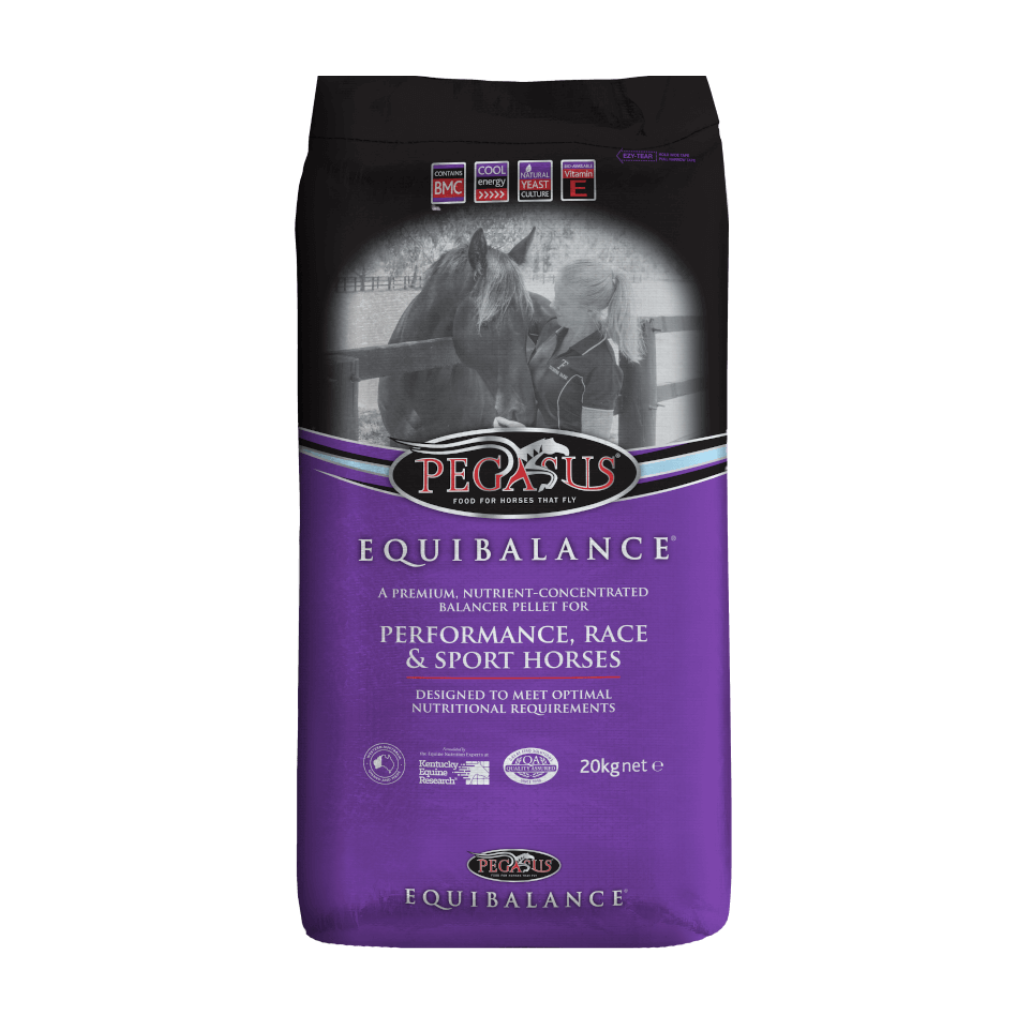
Pegasus Equibalance® is a premium, nutrient-concentrated balancer pellet designed to support the nutritional requirements of performance, race and sport horses. It can be mixed 1:1 with grain, or used as the sole feed for good-doing horses.
Nutritional Analysis – Nutrients As fed basis: Digestible Energy (min) 13.5 MJ/kg, Crude Protein (min) 17.5%, Lysine 0.9%, Crude Fibre (max) 10.0%, Added Salt (max) 1.5%, Crude Fat (min) 8.0%, Calcium (min) 1.5%, Phosphorus (min) 0.6%, Magnesium 0.3%, Zinc 240 mg/kg, Iron 320 mg/kg, Manganese 190 mg/kg, Copper 85 mg/kg, Selenium 1.5 mg/kg, Iodine 1.5 mg/kg, Cobalt 0.1 mg/kg, Vitamin A 20000 IU/kg, Vitamin C 500 mg/kg, Vitamin D3 2100 IU/kg, Vitamin E 500 IU/kg, Vitamin K3 11 mg/kg, Vitamin B1 17 mg/kg, Vitamin B2 23 mg/kg, Vitamin B3 104 mg/kg, Vitamin B5 40 mg/kg, Vitamin B6 9 mg/kg, Vitamin B9 10 mg/kg, Vitamin B12 70 µg/kg, Biotin 0.5 mg/kg
Typical Ingredients: May contain one or more of the following due to seasonal variations: Barley, lupins, cereal by products, wheat, canola meal, soybean meal, molasses, canola oil, minerals, natural yeast culture, organic chromium, natural vitamin E, amino acids, mould inhibitor, KER Buffered Mineral Complex®, KER vitamin/organic trace mineral premix, including Zinpro Performance Minerals®
Available for Click and Collect ONLY:
Farmco Moora – Orders received by 9am (AWST) will be available same day for collection after 4pm.
Yerecoin Traders – Orders received by 12pm (AWST) on a Wednesday will be available for collection by 4pm Thursday.